Ulm Five defence lawyers seek judge recusal after expert witnesses barred
German defence teams have requested the removal of the presiding judge in the Ulm Five trial following the court's rejection of key expert testimony regarding the role of Elbit Systems in the Gaza conflict.
By News Media House Staff ·
Defence lawyers representing five activists accused of breaking into an Israeli-owned arms factory in Germany have formally requested that the presiding judge recuse herself from the trial. The legal team argues that Judge Kathrin Lauchstadt has demonstrated bias after the court rejected applications to hear from two expert witnesses who were prepared to testify about the connection between the company's technology and the war in Gaza.
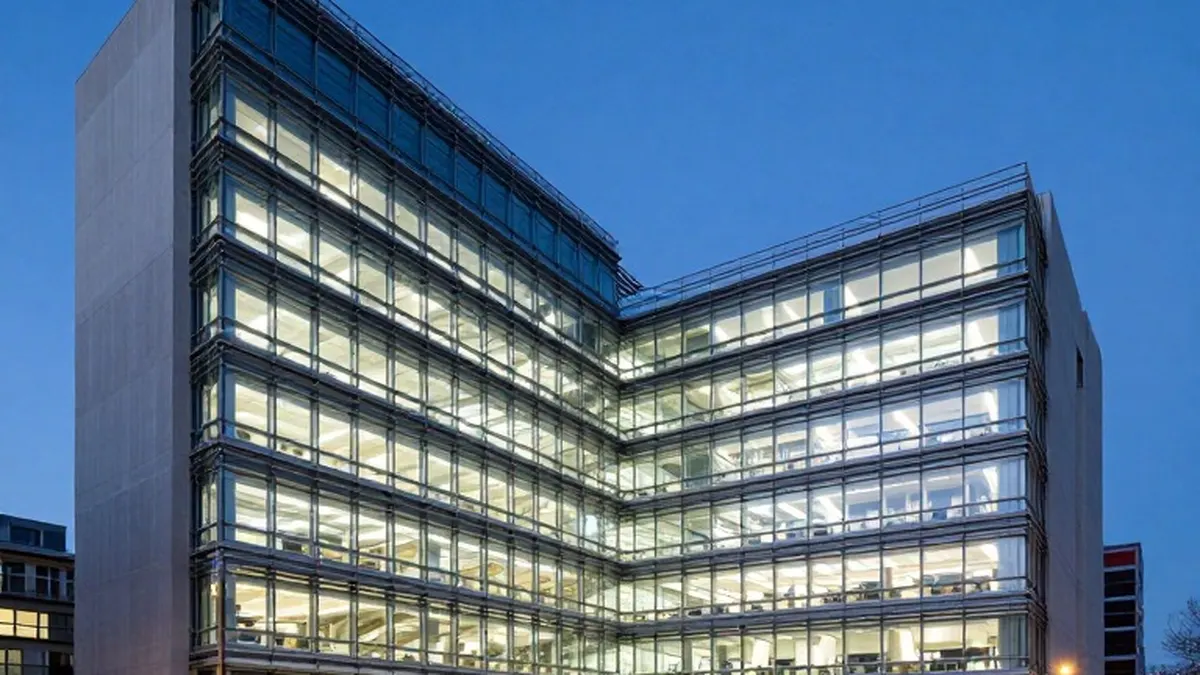
The five defendants, known collectively as the Ulm Five, are Daniel Tatlow-Devally, Zo Hailu, Crow Tricks, Vi Kovarbasic, and Leandra Rollo. They are citizens of Germany, Spain, Ireland, and the United Kingdom. The group was arrested on 8 September following an alleged intrusion into the premises of Elbit Systems in the southwestern German city of Ulm. They have remained in pretrial detention for over a year.
The activists are accused of damaging the glass facade of the building and smashing office equipment, including computers, screens, and telephones. Specifically, they are alleged to have targeted the Tactical Data Links laboratory located at the Elbit site. Under German law, courts are generally required to hear evidence from defence witnesses unless the application is deemed inadmissible. Despite this, the Stuttgart regional court rejected the testimony of both experts presented by the defence in mid-October.
On 14 October, the defence presented Dr. Shir Hever, a weapons expert, to explain the link between the technology developed in Ulm and Israel's military operations in Gaza. After a day of deliberations, the judge rejected the application, stating that the software produced in the laboratory had no connection to the offensive. Two days later, on 16 October, the court also rejected the application to hear from Professor Isabel Feichtner, an international law expert who was to provide evidence on the genocide.
Benjamin Düsberg, the lawyer representing Tatlow-Devally, described the court's decision as absurd. He noted that the court had not yet heard any evidence on the subject, making it impossible for them to know the details. Consequently, the defence team is now demanding the judge's recusal on grounds of bias. Speaking to reporters outside the court on Friday, Düsberg called the proceedings a pure show trial.
During a press conference, Dr. Hever explained that the Tactical Data Links network allows Israeli soldiers to communicate and share target locations. This data is sent to a cloud platform called the Nimbus Project, which is produced by Amazon and Google, and then analysed by artificial intelligence to generate targets on an industrial scale. Hever argued that this method of target generation is unprecedented and justified the activists' action.
Defence lawyers have also raised concerns about the conduct of police witnesses called by the prosecution. According to the legal team, witnesses stated they were instructed not to investigate Elbit's activities in relation to the Gaza conflict. Mimi Tatlow-Golden, the mother of Tatlow-Devally, recounted that a police officer named Mr. Herold admitted he did not investigate where 38 percent of Elbit's profits went abroad because it was not his area of expertise.
Nina Oner, a defence lawyer representing Hailu, criticized the police witnesses for frequently citing memory loss or confidentiality when questioned. She stated that witnesses often claimed identical amnesia or invoked limitations on their authorization to testify. This pattern led the defence to question the thoroughness of the investigation, particularly regarding the role of German intelligence services.
On 25 August, the court heard from Ms. Jager, an investigating officer from the Stuttgart State Criminal Police Office. She was tasked with processing the defendants at the Ulm-Mitte police station on the day of their arrest. Tatlow-Golden said that Jager could not recall any details of her interactions with the defendants, including whether they asked for lawyers or what time events occurred. The defendants were reportedly denied access to their lawyers for 12 hours.
The Stuttgart regional court responded to a request for comment by stating that it does not comment on the conduct of the presiding judge or the behaviour of those involved in the trial. The court confirmed that the two expert witnesses had been rejected and noted that no decisions have yet been made on the remaining evidence applications submitted by the defence team. The Stuttgart State Criminal Police Office similarly stated that it does not comment on ongoing investigations.
Originally published by News Media House · Source: Middle East Eye