Harris County Sets Primary Record as Young Black Voters Turn Out in Force
Record turnout in the state's largest county is driven by a surge of younger voters, shifting the demographic center of gravity for Democratic candidates.
By Robert Herrera ·
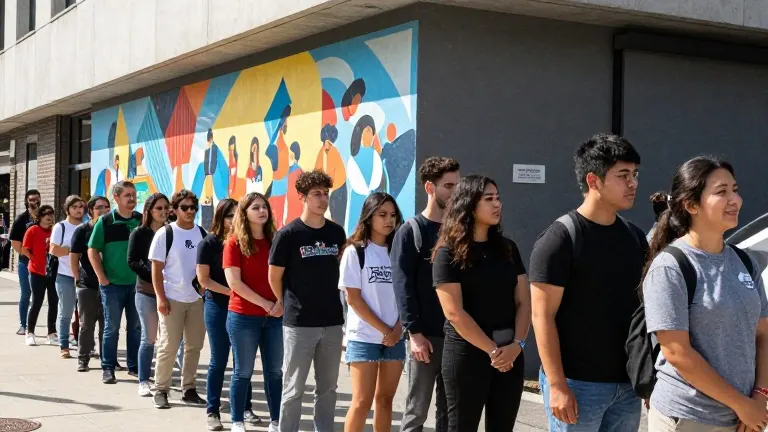
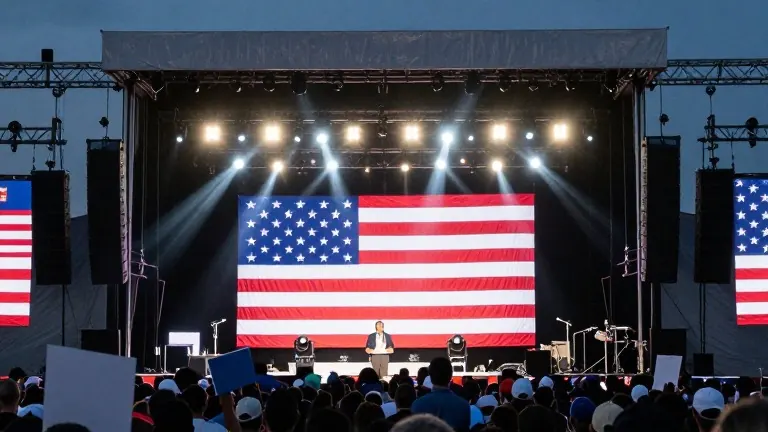
Harris County reported record turnout during this year's non-presidential primary, with more than 565,000 voters casting ballots over 12 days. Harris County Clerk Teneshia Hudspeth confirmed the figures, which represent a historic high for a primary cycle in the absence of a presidential race. Demographic estimates suggest approximately 118,650 of those ballots came from Black voters, a group that has historically driven election outcomes in the region.
The surge is attributed largely to a younger demographic. Since the end of former President Barack Obama's terms, Black voter turnout among younger generations had lagged behind older cohorts. However, analysts and organizers report a distinct shift in 2026, with high school, college, and millennial-age voters participating at higher rates than in previous cycles. This change has altered the strategic landscape for Democratic candidates in Texas, who now rely on this group to offset razor-thin leads in statewide races.
Texas possesses the largest population of Black eligible voters of any state, numbering 2.9 million as of 2022. According to Pew Research, this group comprises about 14% of all eligible voters in the state. They constitute roughly one-fifth of likely Democratic primary voters and between 11% and 13% of the general electorate. Because of this concentration, particularly in Harris County, San Antonio, Dallas, and East Texas, the Black vote remains a decisive factor in determining election results.
Organizers note that younger voters are prioritizing different issues than previous generations. While older cohorts focused on civil rights and equality, younger voters are concerned with affordability, environmental policy, and job security. Stephanie Williams, senior state organizing manager for Black Voters Matter, stated that her organization has registered over 60,000 young people to vote in Texas. She described the current effort as a move to educate these new registrants on voting logistics and to train them as organizers and strategists.
The shift in voter composition is evident in past results. Former President Joe Biden won Harris County by 13 points in 2020. By the 2024 cycle, Democratic candidate Kamala Harris won the same county by only 5.5 percentage points. Michael Adams, a political science professor at Texas Southern University, noted that the state has struggled to re-engage the Black vote since the 2008 and 2012 peaks. He cited the end of party-line voting in 2020 and consistent redistricting as contributing factors to voter confusion and burnout among younger demographics.
Advocates are employing new strategies to reach this audience. The Texas Organizing Project, along with other groups, is working with social media creators and influencers to distribute voter guides and host community events. Brianna Brown, executive director of the Texas Organizing Project, said that messaging focused on healthcare and daily life resonates more with young people than candidate-specific appeals. Organizations are also utilizing murals and block parties in historic Black neighborhoods to encourage civic participation.
Pam Gaskin, co-founder of the Houston Voting Initiative, described the current moment as a necessary transition. She said, “I cannot fight this fight much longer. I think it’s time.” This sentiment is shared by younger leaders like Erika Harrison, who uses her social media platform to mobilize her audience. Harrison acknowledged a changing of the guard but emphasized the need to bridge generational differences in how voters engage with the political process.
The next major step for these organizations is general election turnout. While primary records have been set, the final outcome of the Texas elections remains undecided. Candidates and voting rights advocates continue to focus on mobilizing the base and securing support from disaffected Republican and unaffiliated voters. The infrastructure built in the past few months aims to sustain the momentum generated by the recent primary surge into the fall.
Source: The Texas Tribune