21-Year-Old Photographer Survives Missile Strike in Southern Lebanon
Zeinab Faraj was trapped under rubble for an hour after a strike killed colleague Amal Khalil and two men during a ceasefire visit.
By Eric Coleman ·
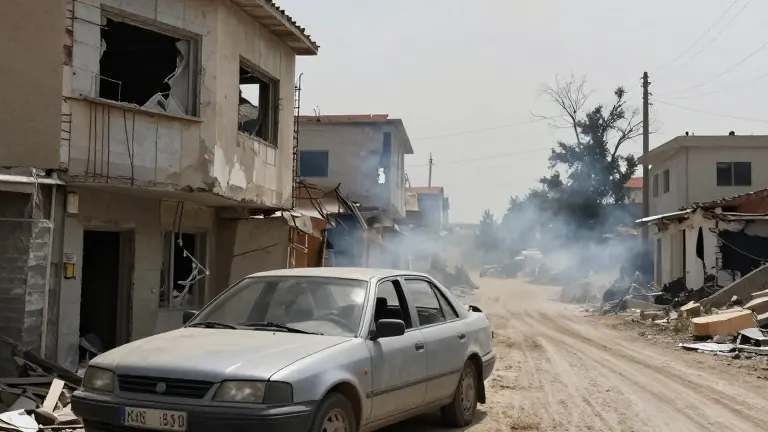
The ceasefire in Lebanon took effect in mid-April following a month of intense aerial bombardment that devastated villages in the south. On the afternoon of April 22, 2026, a strike in the village of al-Tiri killed veteran reporter Amal Khalil and two other men while wounding photojournalist Zeinab Faraj.
Faraj, 21, and Khalil, 42, were traveling together to document the aftermath of the war. They were accompanied in a separate vehicle by Ali Nabil Bazzi, 27, a municipal official, and Mohammed Hourani, 37, a friend of the mayor. The group had met earlier at Tebnine governmental hospital, which residents used as a safe staging point for their movements. Faraj had no prior fear of the trip, noting that she and Khalil had collaborated on multiple assignments before.
A missile hit the lead vehicle, killing Bazzi and Hourani instantly. Faraj and Khalil exited their car to check on the victims. As drones circled overhead, emergency services told them to drive back up the road because ambulances were blocked. A second missile struck their car as they attempted to reenter, throwing both women backward. Khalil wrapped her arms around Faraj to shield her, hoping the drone would assume they were dead.
The pair took shelter in a nearby house where they sat on a bathroom floor. Faraj crawled to a window to monitor the road while Khalil, who was injured, remained still. A drone descended sharply toward Faraj before she returned inside. A third missile impact sent the women into a building, trapping Faraj under rubble. She described the weight as crushing and struggled to breathe until a paramedic reached her.
Faraj was rescued approximately one hour after the initial attack, the same time frame in which Khalil is believed to have died. The Israeli military stated the strike targeted saboteurs violating the ceasefire. Human rights groups labeled the incident a war crime, noting that the military had recently described Khalil's work as "terrorist media" and that she had received death threats. Faraj is now recovering from injuries that affect her gait and facial movement as she prepares to return to university.
Faraj continues to experience night terrors and is haunted by the image of Hourani’s open eyes. She says she is unsure if she will return to frontline journalism, but the physical pain of her limp serves as a constant reminder of the day she lost her colleague.
Source: The Guardian