China AI Crash: $2.4 Trillion Erased
A 40% drop in the STAR 50 index reflects weak consumer demand and rising US restrictions, despite a new state-backed investment fund.
By Robert Herrera ·
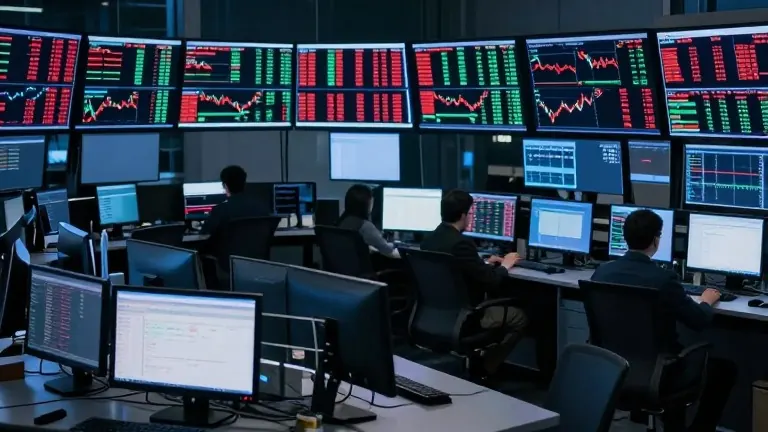
China’s technology sector has lost $2.4 trillion in market value since May.
The decline stems from a sharp drop in artificial intelligence stocks, which now represent more than 40% of the total market value in China and Hong Kong. The STAR 50 Index, tracking innovation firms on the Shanghai exchange, has fallen 40% since June. Other major indices dropped by roughly 20% during the same period.
Beijing has attempted to stabilize the market with a 60 billion yuan state-backed AI fund that began investing in domestic developers this month. However, consumer spending remains weak, preventing many tech companies from generating consistent profits. Dan Wang, the China director for the Eurasia Group, described a general anxiety among firms about whether state support can overcome this lack of demand.
External pressure from the United States has intensified the sell-off. Washington has banned Chinese humanoid robots on national security grounds and is considering restricting Chinese components in data centers. These measures hurt Chinese exporters who struggle to sell enough products domestically to sustain operations.
The robotics sector, viewed by Beijing as a solution to an aging population and shrinking workforce, faces its own challenges. Demand currently comes from government agencies and research institutions rather than households. Products remain too expensive and impractical for everyday home use. Unitree, a leading Chinese robot maker, has seen its share price halve since beginning to trade in August.
Wang noted that embodied intelligence has yet to generate mass market profits. Thin margins, rising US interest rates, and soft domestic demand contribute to investor caution. The government has also restricted overseas investment to keep capital within China, with new regulations taking effect on December 1. These steps have not yet led to increased domestic market investment.
Optimism persists in specific areas, such as AI research and satellites, which benefit from long-term state military support. Globally, the AI boom is expected to continue for at least another year. This outlook contrasts with the current domestic market conditions in China.
The timing of the downturn coincides with a critical political period. Chinese Communist Party officials are gathering this week for the fifth plenum, which will prepare for next year’s 21st Party Congress. The Congress is expected to confirm Xi Jinping for a fourth term. Leaders are hesitant to introduce risky stimulus measures before this event, fearing potential accountability if policies fail.
Wang described any new stimulus as high risk during this sensitive window. She warned that policymakers who propose untested measures could be held responsible if the economy does not respond. No major stimulus package is expected to be announced before the plenum concludes.
Source: The Guardian
More Business · Customer Complaints · Report a business · Got a Story?