Epstein probes: Democrats' midterm spending and the evidence gaps
Democratic candidates have spent $53 million US on ads mentioning Jeffrey Epstein, but a former federal prosecutor says the document release so far has not proven a hidden trafficking ring.
By Eric Coleman ·
Democratic candidates have poured $53 million US into competitive-race ads mentioning Jeffrey Epstein, compared with $3 million spent by Republicans, according to figures from political spending trackers AdImpact reported by the Washington Post. In the 2024 presidential campaign, Epstein appeared in just three ads, all from Florida candidates.
Democrats say that if they take control of one or both chambers of Congress after the Nov. 3 vote, Epstein-related investigations would be "one of our top priorities." Rep. Robert Garcia of California, a member of the House oversight committee, said this in a recent interview with Bloomberg News. Two bills already introduced in Congress could provide routes for that work: one follow-up bill from Rep. Ro Khanna and Rep. Thomas Massie would let state attorneys general and survivors sue the Justice Department for unredacted files the administration has withheld, citing sensitivity or privilege such as lawyer-client communications; the other, the Epstein Wall Street Records Act from Garcia and Sen. Elizabeth Warren, would require regulators "to disclose supervisory records related to Epstein and his associates" and investigate Epstein-connected banks and executives for possible banking, securities, or illicit financing violations.
Former federal prosecutor Ankush Khardori has argued Democrats should spend their time elsewhere. He called the release of Epstein documents without context beginning last year "a historic mistake" and wrote in a Boston Globe op-ed, reproduced on his website, "The presumption of innocence has been turned on its head. We have countenanced an ethos of guilt by association." Khardori pointed to the April suicide of Edward Juul Rod-Larsen of Norway, whose family, mostly his parents, faced questions about contacts with Epstein. Nearly a year after the Epstein Files Transparency Act took effect and after more than 19 interviews by the House oversight committee, Khardori wrote that a claim made by advocates for disclosure, that the Justice Department's files would expose a hidden child sex trafficking ring, "has not been substantiated." He suggested Democrats could assign a respected prosecutor to oversee an Epstein-related commission if they believe more can be learned.
Evidence gathering faces limits. Epstein is dead, and Ghislaine Maxwell is serving a lengthy prison sentence, which Khardori described as affecting her credibility. Three of the women who said Epstein abused them are no longer living, as are a number of notable people who spent time with him. Rep. James Comer, the Kentucky Republican who has led the House oversight committee, made two referrals to the Justice Department earlier this year based on testimony from Sarah Kellen, a former Epstein assistant. Kellen accused two men of sexual assault in separate encounters and said neither Epstein nor Maxwell facilitated the alleged abuse. The Justice Department does not comment on ongoing probes and is not required to act on a congressional referral, so whether those leads are being pursued is not clear.
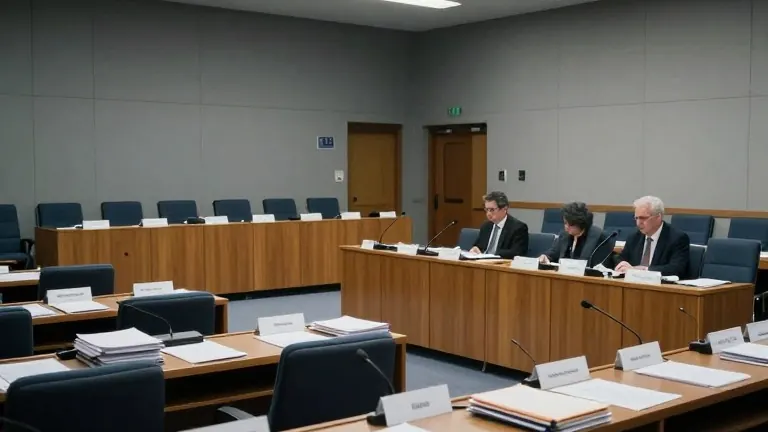
Garcia also raised bringing some witnesses back for questioning under oath. Those who have appeared, including Bill Clinton and Bill Gates, were advised before questioning that they had an obligation to tell the truth. CBC News reviewed all publicly available oversight committee transcripts and found the sessions were often repetitive, with legislators dipping in and out and asking questions already posed by colleagues. Witnesses who visited Epstein's New York townhouse were asked about a painting of Clinton in a blue dress that Epstein owned, and many witnesses, regardless of their connection to Epstein, were asked whether he worked for Mossad or another foreign intelligence service. Nearly every witness was read a list of known names, from Woody Allen to Noam Chomsky to Ehud Barak, to see if they had interactions with those individuals. Hillary Clinton said after her interview that the panel was on a "fishing expedition."
Democrats on Monday released a report from their judiciary committee members collecting damaging mentions of Trump in the Epstein file dump so far, including allegations of sexual abuse and rape. One allegation was publicly reported during the 2016 presidential election, and another emerged during the 2024 campaign in a limited form; that accuser now alleges she was raped in an alleged 1993 incident. A civil suit related to an allegation involving a young teen was twice dropped by the anonymous plaintiff's lawyers more than a decade ago. Trump has never been formally accused of a crime related to his Epstein friendship. House Democrats recommended appointing a special counsel to investigate the allegations, a step only the attorney general can take.
The Epstein Files Transparency Act was enacted, and the oversight committee has conducted more than 19 interviews.
Source: CBC News