Robot Production Begins in Fremont
Tesla has begun manufacturing its humanoid robot on a dedicated production line, marking a new stage for the program.
By Thomas Reynolds ·
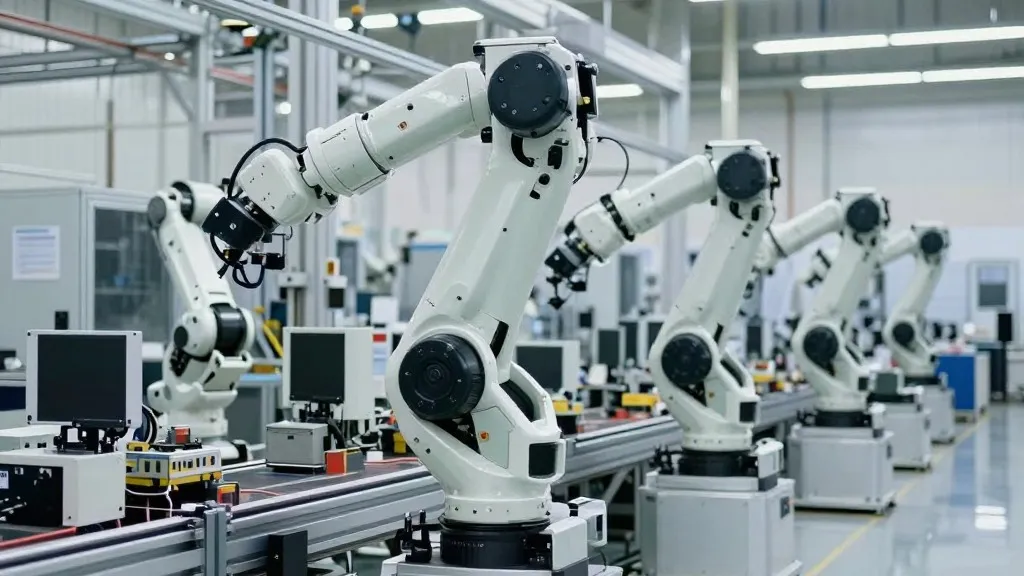
Tesla has commenced production of its humanoid robot on a high-volume line established at its Fremont facility. The company reported in its third-quarter shareholder letter that the units emerging from this operation are the first to achieve production-quality standards suitable for a commercial product.
This manufacturing capability is situated in the space previously used to assemble Model S and Model X vehicles. Following the removal of the prior vehicle line in 46 days, the facility was repurposed to support robot production. During a recent earnings call, Elon Musk stated that most equipment necessary for the target capacity is already installed in Fremont, with output anticipated to rise toward approximately 20,000 robots weekly as the operation expands.
Musk characterized the production ramp as a classic S curve, noting that the initial phase involves a shallow slope. The team is currently focused on refining the robot's artificial intelligence, electromechanical design, reliability, and service life, with this work expected to conclude by the end of next year. At that point, Tesla intends to begin delivering the robots to external companies for hazardous, repetitive, and continuous tasks.
To address the challenge of training data, which differs from the vast fleet of vehicles available for its automotive AI, Tesla plans to establish an Optimus Academy. In this facility, 10,000 to 20,000 robots will practice various tasks, feeding the information gathered into the subsequent model. Every unit produced at the Fremont line will contribute to this training data.
Planned hardware improvements include the integration of the AI5 chip into the robot next year. Musk indicated that a new demonstration video showing the robot completing tasks via AI rather than preprogrammed motions is expected within one to two months. The supply chain is also advancing, with several partners certified in September to mass-produce components for the program.
Production costs are reportedly trending toward the manufacturing cost of the Cybercab, indicating a design engineered for volume. Much of the current engineering effort is directed at the robot's hands, which remain the most difficult aspect of the design. A larger factory for this program is under construction at Giga Texas, with a long-term target of 10 million robots annually.
Source: Teslarati