Transport Minister Resigns Following 69-Death Train Collision
Oscar Puente steps down from his cabinet post and withdraws from the upcoming election after a fatal crash outside Madrid.
By Sakura McCarthy ·
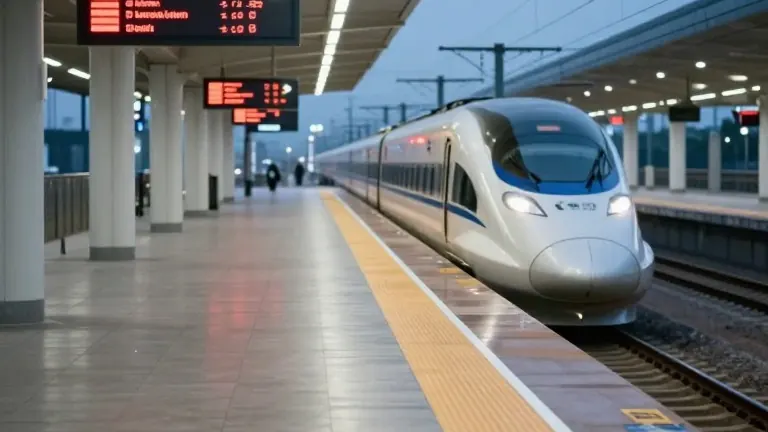
Oscar Puente, Spain’s transport minister, formally resigned on Tuesday following the train collision that claimed 69 lives the previous week. In a statement to lawmakers, he confirmed he was stepping down from his ministerial role and withdrawing his candidacy from the early legislative elections scheduled for November 29.
The incident occurred on Wednesday outside the village of Urda, approximately 80 miles south of Madrid. A Renfe train collided with a stationary Iryo train after an automatic safety system failure halted traffic on a 39-mile stretch of track. Despite the system outage, a control center operator authorized the Renfe service to resume its journey, leading to the impact.
Puente had previously stated the government would work tirelessly to restore public trust in the high-speed rail network, the second-largest in the world. He outlined new safety measures, including the development of software to issue automatic alerts and identify traffic anomalies. An artificial intelligence agent will oversee this system to minimize human error, according to Puente. Additionally, a second operator will be required to confirm decisions made while the automatic safety system is offline.
The resignation comes amid intense pressure from the right-wing opposition and railway unions. These groups criticized the government for initially placing the bulk of the blame on a single control center operator. The drivers’ union Semaf, which has called for strikes on November 10 and 12, cited worsening working conditions and the use of degraded systems as key factors in the disaster.
Critics argue that maintenance investment has lagged behind passenger growth since the 2021 liberalization of Spain’s rail network. This change allowed private operators like Iryo to enter the market, breaking Renfe’s decades-long monopoly. Puente acknowledged these concerns by announcing reforms to control center operator conditions, including adjusted break schedules and fatigue monitoring.
The government also announced a 30 million euro aid package for the families of the deceased and those injured in the crash. This event is the second major railway disaster on the Madrid to Seville line this year. A collision in Andalusia in January killed 46 people on the same route, which opened in 1992 as Spain’s first high-speed line.
Source: The Guardian