2027 NBA Draft Big Board: Kansas Freshman Tyran Stokes Tops Early Top 100 Rankings
Kansas freshman Tyran Stokes headlines the first big board for the 2027 NBA draft, a class expected to test scouts amid a weaker freshman group, new NCAA eligibility rules and revamped lottery odds.
By News Media House Staff ·
The 2027 NBA draft cycle is officially underway with college basketball tipping off this week, and league evaluators are bracing for what many have anticipated will be a down year for talent. The incoming freshman class is considered weaker than those of recent seasons, a dynamic expected to create more room for older and returning prospects to climb draft boards in the coming months.
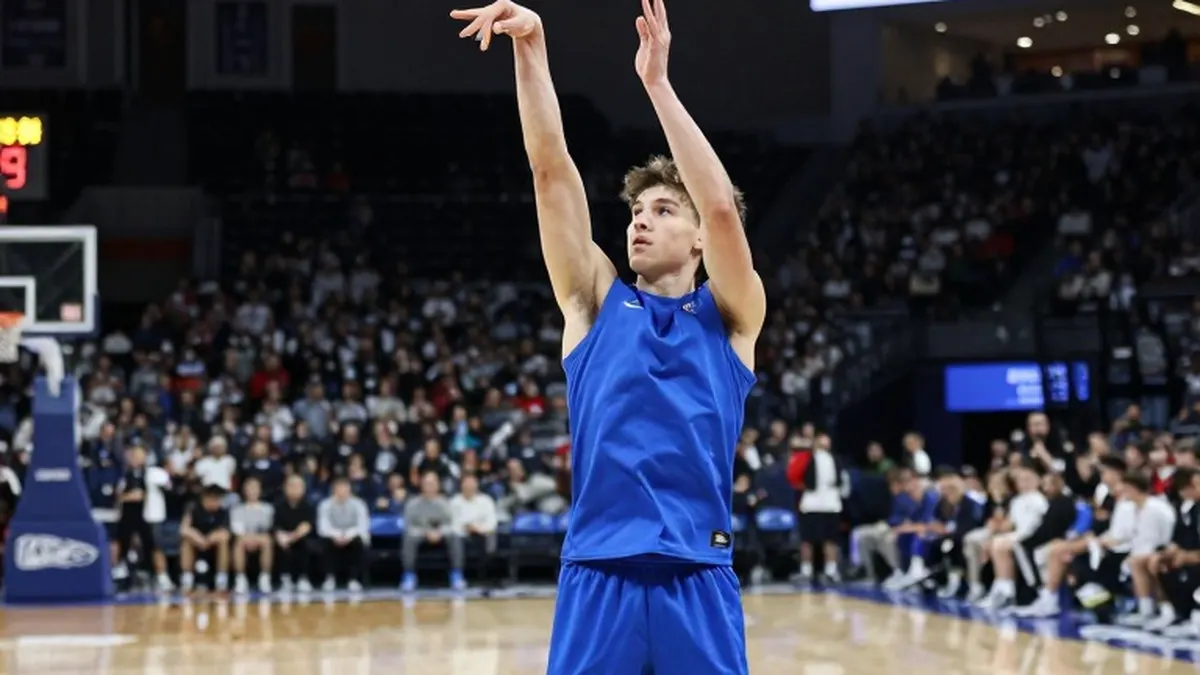
Kansas freshman Tyran Stokes opens the season as the projected No. 1 pick. The 6-foot-8 perimeter talent, listed at small forward and point guard, profiles as the type of big, modern playmaker the NBA covets, capable of creating for teammates and attacking mismatches with his handle and physicality. His decision making and jump shooting remain works in progress, and evaluators are looking for better efficiency, consistency and maturity. While there is no consensus at the top, his skill set gives him an early edge.
Slovenian point guard Stefan Joksimovic, who plays for Baskonia, ranks second after vaulting into the No. 1 discussion by leading Slovenia to gold at the under-18 EuroBasket over the summer. The 6-foot-8, 18-year-old is one of the youngest players in the class, and his minutes have increased since his club made a coaching change in mid-October, though questions remain about his perimeter shooting and his ability to create without a screen.
BYU wing Bruce Branch III sits third, boasting a 7-foot-1 wingspan and defensive tools that could make him an immediate impact player, though scouts have noted occasional passivity. Arkansas guard Jordan Smith Jr. ranks fourth on the strength of his tenacious perimeter defense and explosive transition play, while Arizona guard Caleb Holt rounds out the top five with his slashing ability, disruptive defense and ceaseless motor. Illinois freshman Quentin Coleman, a combo guard who has built momentum with NBA scouts since the spring, is sixth.
Arizona senior center Motiejus Krivas headlines the returning group at No. 7 and is viewed by many scouts as the most NBA-ready college center. The 7-foot-2 big averaged 10.4 points and 8.2 rebounds last season and shot 78 percent from the foul line, and he now has a pathway into the lottery amid strong league demand for size. UConn sophomore Braylon Mullins, on the shortlist of the best shooters in college basketball after averaging 12.0 points in an injury-interrupted freshman year, is eighth, followed by Florida senior Thomas Haugh, who turned down a chance to be a first-round pick, and Duke junior center Patrick Ngongba II, who is set to carry a larger offensive load with Cameron Boozer off to the NBA.
Arizona sophomore Ivan Kharchenkov slots in at No. 11 after scoring 38 points on 20 shots in the Wildcats' opener, while Louisville freshman center Obinna Ekezie Jr. is 12th. Ekezie reclassified to arrive a year early despite undergoing shoulder surgery earlier this year, and he impressed in a preseason showing against Kansas.
The class will be evaluated against a shifting college landscape. The NCAA's new five-year eligibility rule has loaded rosters with older players, and Division I programs can now pay top players well above the contractual slot value of a first-round pick, meaning most players on the board could return to school. That shift is expected to thin out the first round come spring and drastically affect the depth of the second.
The 2027 draft will also be the first conducted under the NBA's new lottery rules designed to curb tanking. The revamped system increases variance in selection order, with the worst teams now able to fall outside the top 10 and play-in teams given more upward mobility.
Taken together, the lottery changes, the evolving college game and the flatter talent curve of this class could make for a particularly unpredictable year. The rankings reflect current evaluations and intel from around the NBA and college ranks rather than team fit or draft order, and the board is expected to change considerably as the season unfolds.
Originally published by News Media House · Source: ESPN
More News · National news · Report a business · Got a Story?