
Parkinson's patient returns to woodcarving after brain surgery
An Arizona artist regained steady hands and his creative practice following deep brain stimulation.
By Eric Coleman ·
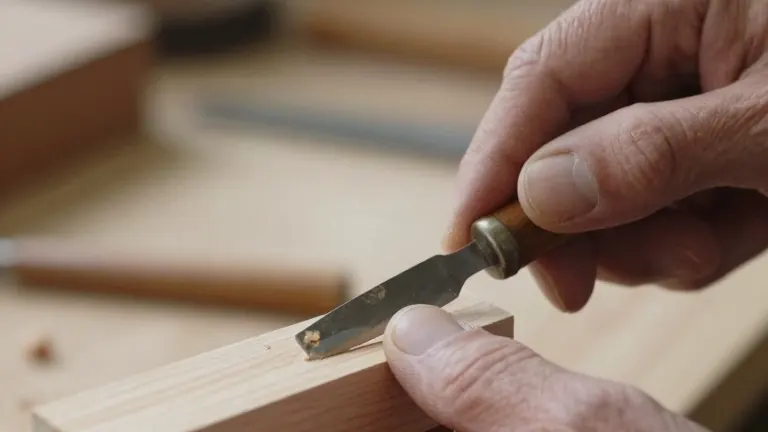
Bill Daggett can carve wood again. The Arizona artist lost the ability to hold tools after his hands began shaking uncontrollably. He has now recovered his steady grip following a specific brain surgery.
Daggett was diagnosed with Parkinson's disease after a doctor noticed his tremors at an art show. The physician urged him to seek a proper medical evaluation. Standard medication did not stop the shaking for Daggett. He opted for deep brain stimulation, or DBS, as an alternative treatment.
The procedure involves sending electrical pulses to specific areas of the brain. This technology aims to interrupt the signals that cause tremors. Daggett's hands are now stable enough for detailed carving work. He no longer struggles to hold a fork or eat without spilling.
Sam Cradduck, a gerontologist and host of the show 'Aging Untold,' explained the mechanics of the treatment. He compared the device to a pacemaker used for the heart. Cradduck noted that the brain implant helps reset electrical rhythms in the brain. This process reduces tremors and slows certain side effects of the disease.
"What they did was basically give his brain a pacemaker," Cradduck said. "You know, we're kind of accustomed to the thought of a pacemaker helping a heart keep rhythm. But this is a new way to go in and help that brain reset and send those electrical pulses out to give the brain the pacemaker to now reduce those tremors, reduce some of the side effects of the disease and the progression of it."
Daggett described how the disease affected his daily life and mental state. He said he could hardly eat and avoided going out in public. "I was shaking so bad, and I didn't want to go out anymore. That's part of the depression. You don't want to be seen when you can't hold a fork and get it to your mouth," he said. The inability to work as an artist compounded his emotional distress.
Cradduck emphasized the importance of recognizing the emotional impact of neurodegenerative conditions. He stated that DBS acts as a quality of life breakthrough for long-term patients. "We talk about the physical aspects of disease and aging all the time, but we forget to talk about the emotional loss, and that's where this guy was at," Cradduck said. "He was so connected with being the artist and being able to create, and the disease was robbing him of that. We see that it's robbing him of physical abilities maybe to eat, but we forget that it's robbing him of a piece of himself."
Source: WHPM-LD