2028 Presidential Race Heats Up as Trump Era Nears End
Both major parties face internal fractures and strategic shifts ahead of the next presidential election cycle.
By Sakura McCarthy ·
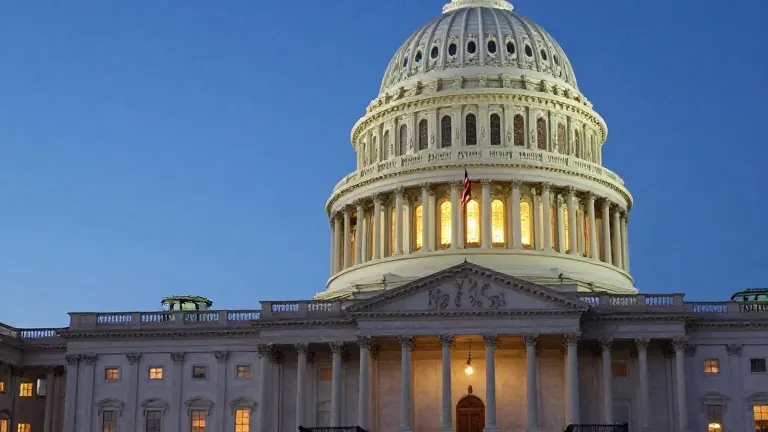
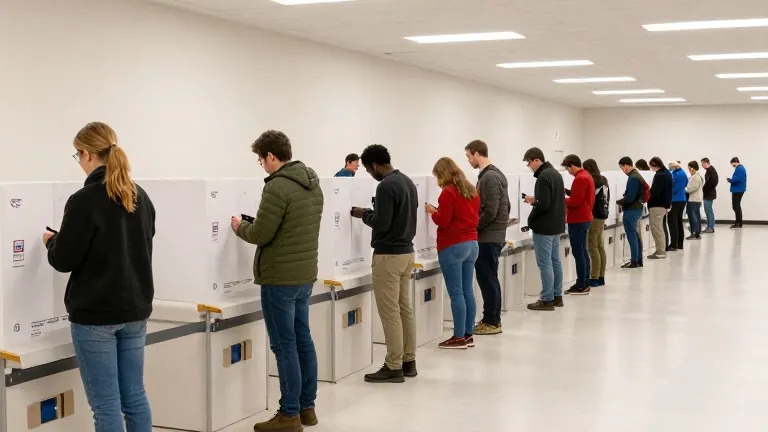
President Donald Trump is 80 years old and entering his final two years in office. As the 2026 midterm elections approach, both major political parties face internal conflicts that will shape the lead-up to the 2028 presidential race. The outcome of Tuesday's vote will determine the balance of power in Congress and influence which faction within each party gains momentum for the future.
Republican strategist David Urban said the stability of Trump's coalition will be the key indicator of the party's direction. He noted that if working-class voters and new demographic groups stay home due to economic or war-related dissatisfaction, questions will arise about who will lead the party next. Trump has moved the Republican Party away from traditional fiscal conservatism and social values, creating a fluid populism that aligns with his personal brand. This shift has attracted a broader coalition, including Hispanics, African Americans, and young voters who were historically aligned with Democrats.
Vice President JD Vance is the current frontrunner for the Republican nomination in 2028. The 42-year-old former Ohio senator has transformed from a critic of Trump to a loyal ally. However, he faces the challenge of establishing an independent political identity while serving in the second-highest office in the nation. A poor showing for Republicans in the midterms could hurt his standing. Other potential candidates include Secretary of State Marco Rubio, Texas Senator Ted Cruz, and Florida Governor Ron DeSantis. Former New Jersey Governor Chris Christie, age 64, is also weighing a comeback as a vocal Trump critic.
Former Republican Senator John E. Sununu, who is running for the New Hampshire Senate seat he lost in 2008, described the upcoming transition as a vacuum. He asked, "When President Trump leaves office, it’s going to create a tremendous vacuum. And I ask the question, where does the country go next?" Sununu highlighted the uncertainty surrounding the party's guiding principles in the absence of the current president's dominant influence.
Democrats are also divided on their post-midterm strategy. Establishment figures are backing Representative Hakeem Jeffries, who could become the first Black House speaker if Democrats win the majority. However, progressive members of the party argue that Jeffries and Senate Democratic Leader Chuck Schumer are part of the problem. They are demanding sweeping changes in leadership and policy. The number of House members backed by the Democratic Socialists of America is expected to grow from two to at least seven in the new Congress. This increase is largely due to the success of candidates backed by New York Mayor Zohran Mamdani in the primaries.
Michigan Senate candidate Abdul El-Sayed would add another voice to the left flank, though he is not endorsed by the DSA. Maryland Governor Wes Moore, a presidential prospect facing reelection, said he wants leaders who can disrupt the status quo. Moore told The Associated Press, "I don’t want to be a party of no and slow. I want to be a party of yes and now." He emphasized the need for urgency in delivering results for families. Despite his rhetoric aligning with activists, Moore and the party's left wing may disagree on the specific tactics needed to challenge Trump's allies in Congress.
Corbin Trent, a former adviser to Representative Alexandria Ocasio-Cortez, stated that the election represents a rejection of the status quo. He claimed that current Democratic leadership is incapable of meeting this transformational moment. Trent said, "The fact is, Chuck Schumer, Hakeem Jeffries and the bulk of Democratic leadership has proven it's incapable to meet this moment for what it is: a transformational moment to bring us forward." He cited healthcare, housing, and infrastructure as key areas for transformative change.
David Urban compared Trump's ongoing influence to the Colossus of Rhodes, an ancient Greek statue of the sun god Helios. He said, "Until the day Donald Trump draws his last breath, he will still loom large like the Colossus of Rhodes over the Republican Party." Urban argued that no one else will be more influential in Republican politics, regardless of the election results. Trump will remain in office for two more years and will continue to shape the party's direction and the next presidential nomination fight.
Source: KPRC-TV