59 Million Early Ballots Set Stage for Historic Shift in Congressional Control
Democrats lead early voting data by double digits, but Republican turnout in red states will determine if the House flips and which party holds the Senate.
By Robert Herrera ·
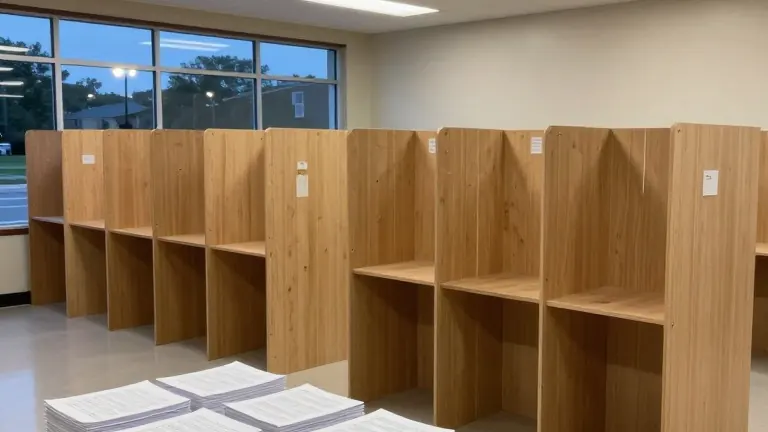
More than 59 million Americans cast their ballots before Election Day, a figure that represents nearly half of the total votes recorded in the previous midterm cycle. This massive early turnout creates a distinct baseline for the final count, with Democrats currently holding a double-digit advantage in available data. As polls close today, the focus shifts from projection models to the specific performance of Republican voters in key swing districts.
The House race presents a clear arithmetic challenge for the Republican Party. Democrats need to flip only three seats to seize control of the chamber. Analysts note that the political environment has shifted in their favor over the past month. Although Republicans attempted to protect their positions through mid-decade redistricting, those map changes appear insufficient to prevent a potential change in leadership. The outcome hinges on whether the party can overcome its structural disadvantage in these competitive districts.
The Senate contest remains far more volatile than the House race. Democrats must capture four seats to gain a majority, a goal that seemed unlikely at the start of the campaign cycle. Strong candidate recruitment and a difficult national environment for Republicans have made this scenario possible. However, the terrain is challenging. Apart from Maine, the five toss-up races are in states that Donald Trump won by double digits in 2024. These locations favor the party in power, requiring exceptional turnout from the Democratic base to succeed.
Republican strategy relies heavily on in-person voting on Election Day, a behavior that defines their strength in red states. Donald Trump has campaigned extensively in these regions to energize his base. Michigan stands out as a primary target for Republicans. If the party wins that seat, it alters the Democratic calculation for the entire chamber. Conversely, low turnout among Republican voters could lead to the loss of six or seven seats, securing Democratic control of the Senate.
Vote counting begins at 6 p.m. ET in Kentucky and Indiana. While results will begin to trickle in shortly after polls close, many races are expected to remain too close to call for days or even weeks. Voters and observers are advised to expect delays as states process ballots in what are predicted to be tight contests. The final tally will determine which party holds the balance of power in both chambers of Congress.
Source: WWNO