Argentina cuts corporate tax to 15% to lure billion-dollar AI data centers
President Javier Milei is seeking Senate approval for incentives that would attract major tech firms to Patagonia, promising low regulation and vast energy resources.
By Robert Herrera ·
Argentina is moving to slash its corporate income tax rate to 15% for large artificial intelligence projects. The proposal, which reduces the standard 25% rate, applies to investments of at least $1 billion. The measure is currently awaiting approval in the Senate. President Javier Milei introduced the plan to attract foreign capital into his crisis-prone economy.
Milei has positioned the southern region of Patagonia as a prime location for data centers. The area offers low population density, cold temperatures for natural cooling, and strong winds for renewable energy generation. It also sits near the Vaca Muerta shale deposit, one of the world's largest reserves. "We are not going to regulate artificial intelligence," Milei told the U.S. Chamber of Commerce last month. "We are going to leave it free."
Recent visitor logs show a steady flow of tech leaders meeting with Argentine officials. The list includes venture capitalist Peter Thiel and representatives from OpenAI, Amazon, Google, and Oracle. Crusoe, a data center developer that helped build OpenAI's Texas campus, also sought talks with Argentine energy officials this year regarding U.S. government-backed investments.
Marta Zlotkowska, head of international development at Green Capital, stated that her company plans to build a $3 billion data center in Patagonia. The Polish renewable energy firm has not yet secured a customer. "We compared potential locations for the project around the world and Argentina came out on top in every category," she said. Green Capital is in talks with 14 landowners in Chubut province. Together, they have leased 130,000 hectares, or about 321,000 acres, for the project.
Critics argue that the incentives do not require companies to reserve computing power for local use or disclose energy and water consumption. Alan Rocha Varsanyi of the environmental group Observatorio Petrolero Sur noted that the computing capacity will likely be exported to global companies. "We're not talking about data centers designed to strengthen Argentine technological sovereignty," he said. Opposition lawmakers have also stalled a bill allowing AI agents to control companies.
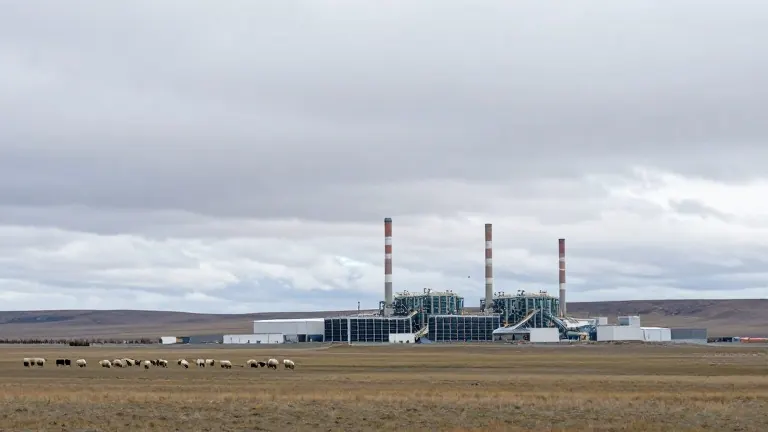
Construction on the Green Capital project is not expected to begin until around 2028. If the campus operates at peak demand, it would consume about 2.7 times as much electricity annually as the city of Buenos Aires did in 2025. The company promises to generate all its own power from wind, solar, and gas. In the Chubut province, sheep farmers are leasing land to the developer while maintaining their grazing operations alongside the future site.
President Milei is set to host Pope Leo XIV next week. The pope has warned of the threats AI poses to humanity. Some investors are waiting until after next year's presidential election to commit funds. They fear that a change in government could reverse the current free-market reforms.
Source: MySA
More Business · Customer Complaints · Report a business · Got a Story?