
Houston meteorite gets free museum exhibit starting November
Visitors can view the 4.5-billion-year-old space rock that crashed through a Spring home at the Houston Museum of Natural Science.
By Robert Herrera ·
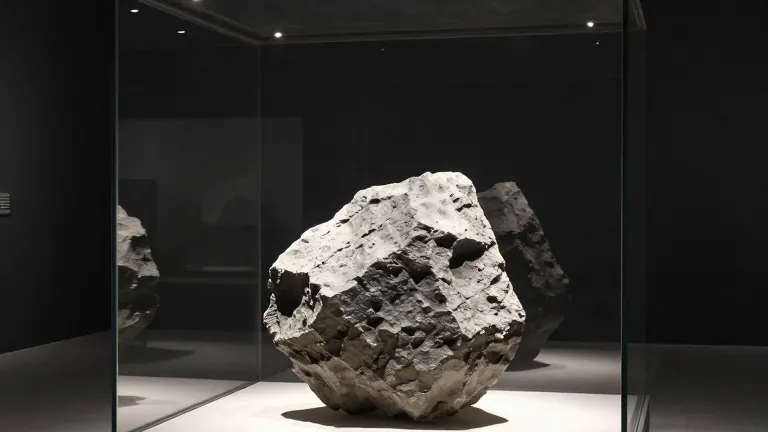
Residents of Southeast Texas will soon have a closer look at the space rock that shook their homes and shattered a roof in the city of Spring. The Houston Museum of Natural Science is launching a new, free exhibit called Fall to Earth on November 6. The display features the meteorite that struck the area in March, allowing the public to examine the object up close.
The impact occurred on March 21 at approximately 4:40 p.m. A one-ton rock traveling at nearly 35,000 mph broke apart 29 miles above the ground. The disintegration created an explosion with the force of 26 tons of TNT. The resulting sonic booms rattled windows and structures across the region. One specific piece of the debris punched through the roof of a home in Spring and landed in an upstairs bedroom.
Sherrie James was inside the house when the fragment came through. The piece landed near her daughter's bed. James described the event as exciting because the rock has traveled through space for billions of years. She stated that she feels blessed the object came to her home. The incident triggered a search effort across North Houston to find other pieces of the rock.
NASA planetary scientist Marc Fries led the recovery efforts. He used weather radar, seismometers, and eyewitness reports to identify search zones. Fries eventually found a 46-gram fragment in a grassy strip along Cypresswood Drive near the Barbara Bush Branch Library. Since the initial impact, researchers have recovered 19 fragments in total throughout the Houston area.
Rice University researchers analyzed the recovered material and identified it as an ordinary chondrite. Linda Fries, a science writer at Rice University, explained that while 85 percent of meteorites fall into this category, the term does not imply the rocks are common. Further testing revealed that the Houston meteorite lacks tiny, rounded mineral grains usually found in this type of rock. Scientists determined the rock heated to nearly 2,000 degrees Fahrenheit while attached to its parent asteroid. This heat melted the grains, and evidence suggests the asteroid survived a violent collision in space.
Bidong Zhang, a planetary scientist at Rice, noted in a university report that the meteorite was impacted in space. He called it a unique specimen. Carolyn Sumners, the museum's vice president of astronomy, said in a statement that a 4.5-billion-year-old fragment crashing through a home is an event residents do not typically expect in their neighborhood. Rice researchers have proposed naming the meteorite Houston, pending approval from the Meteoritical Society.
Source: Houston Chronicle