Record Arab Turnout Ties Knesset Blocs at 51 Seats
Exit polls show Palestinian voter participation hit 80 percent, forcing both major political camps to court minority parties for the 61 seats needed to govern.
By Robert Herrera ·
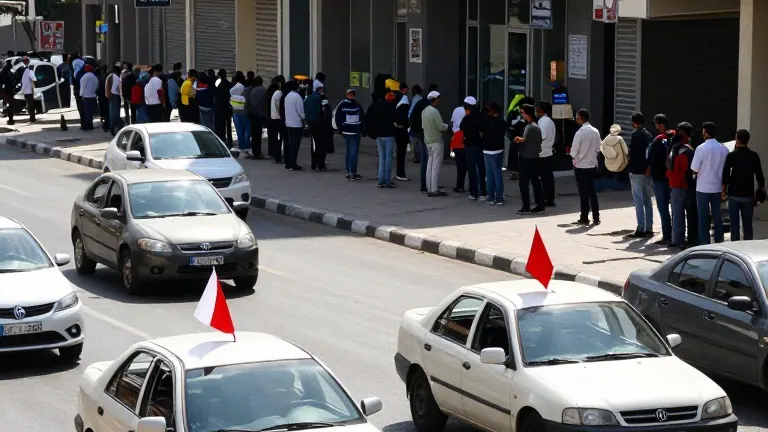
Exit polls from Tuesday’s parliamentary election indicate that the two main political blocs in Israel are tied at 51 seats each in the 120-member Knesset. The deadlock stems from a historic surge in voter participation among Palestinian citizens of Israel, which broke records dating back to 1999. This shift creates a mathematical impasse that neither side can resolve without securing additional support from smaller parties.
Arab-led parties are projected to secure a record total of 18 seats. The Joint List and Ra’am, also known as the United Arab List, are expected to hold these positions. The high turnout among this demographic effectively neutralizes the advantage either the opposition or the governing coalition might have held in a standard electorate. Both camps now face the same arithmetic challenge in the coming days.
Voter turnout among Palestinian citizens of Israel reached approximately 80 percent, according to early indications from Israel’s Channel 12. This figure surpasses the previous benchmark set in 1999. The Central Elections Committee reported that overall national turnout hit 77.7 percent, the highest level recorded since 1999. Palestinian citizens constitute about 21 percent of the country’s 10 million population.
Mansour Abbas, the leader of Ra’am, stated that he hopes the final results will allow the anti-Netanyahu bloc to reach the 61 seats required to form a government. He noted that both major blocs approached his party before and after the vote. Abbas currently holds five seats in the Knesset through his party, which was part of the governing coalition from 2021 to 2022.
“With the numbers we have now, there is no government,” Abbas told Channel 12. He emphasized that the current tally leaves neither side with a clear path to power. His party’s position as a potential kingmaker has increased its leverage in the upcoming negotiations. Abbas confirmed that his team is in contact with both sides as they seek to close the gap.
Alon Pinkas, a former Israeli ambassador, noted that forming a government will be difficult for parties like Gadi Eisenkot’s Yashar. Eisenkot’s bloc is tied with Prime Minister Benjamin Netanyahu’s Likud party at 51 seats. Pinkas pointed out that many candidates in the opposition promised not to form coalitions with Arab parties during the campaign. “There’s a price to pay,” Pinkas said, because “Arabs can’t be kept outside and only being considered and co-opted when you need their votes”.
Netanyahu’s coalition made final efforts on Tuesday to mobilize supporters, citing the high turnout among Palestinian voters. Cars flying Likud party flags drove through Jerusalem playing the Islamic call to prayer. Netanyahu posted images of long lines at polling stations in Arab communities on social media. “If we don’t wake up now, we’ll find ourselves with a government of Mansour Abbas and Ahmad Tibi,” he said.
Nour Odeh, reporting from Ramallah, described the election as an existential moment for Palestinian Israelis. She observed that the record turnout included voters who previously boycotted elections. These voters believed their participation would not change their reality or alter systemic discrimination. The Knesset has passed more than 100 laws discriminating against Palestinian citizens, who also face hurdles in receiving state funds.
The next step in the process is the official counting of ballots, which will determine if the 51-to-51 tie holds or if one bloc pulls ahead. The President of Israel will invite the leader of the party that can form a stable coalition to begin government formation talks. These negotiations will focus on securing the remaining four seats needed to reach the majority threshold.
Source: Al Jazeera
More Business · Customer Complaints · Report a business · Got a Story?