Edward Berger Details Brad Pitt's Upcoming A24 Film 'The Riders'
The director of 'Conclave' describes his new project as a European odyssey and reflects on the challenges of filming with child actors.
By News Media House Staff ·
Edward Berger, the Austrian and Swiss director known for 'All Quiet on the Western Front' and 'Conclave,' provided an update on his next feature, 'The Riders.' Speaking at the Evolution Mallorca festival, where he received the Evolution Vision Award, Berger confirmed that principal photography for the A24 production is complete. He described the film as a singular perspective story told through the eyes of star Brad Pitt.
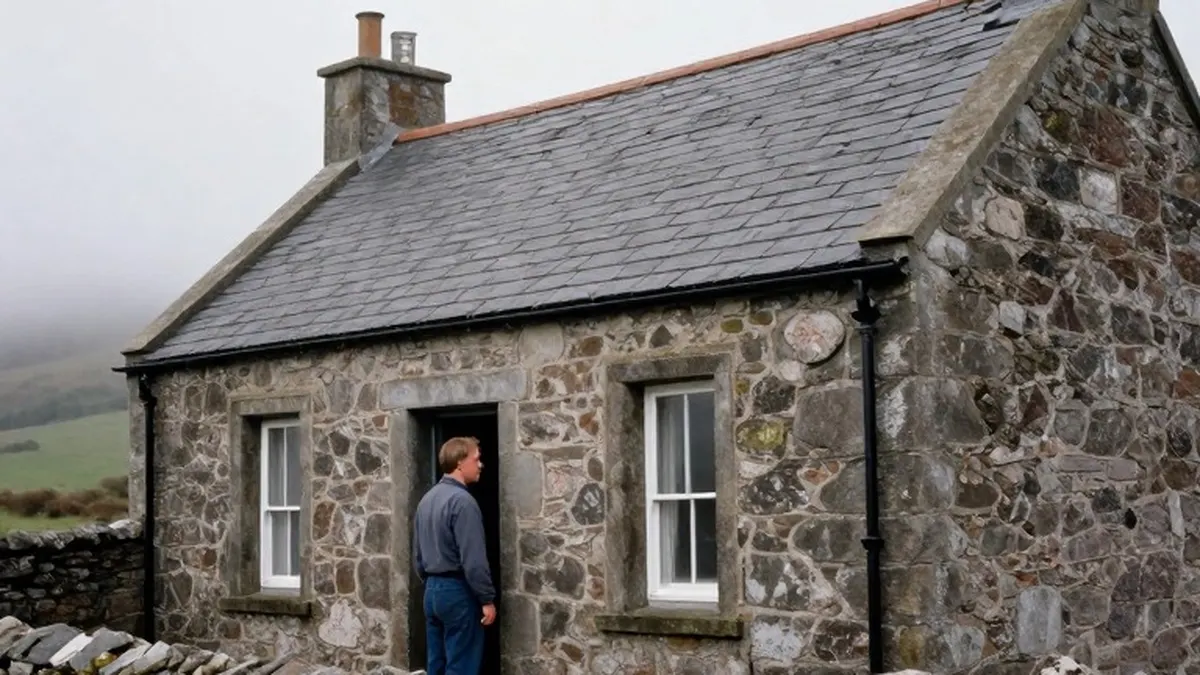
The narrative, adapted from Tim Winton's eponymous novel, follows a man renovating a cottage in 1980s Ireland while waiting for his wife and daughter to arrive. Only the daughter appears, prompting the pair to embark on a European journey to locate the wife. Their route includes Greece, Brussels, and Amsterdam. Berger kept the ending a secret, noting that he would not reveal if the father ultimately finds his wife.
A24 serves as both the financier and distributor for the project. The screenplay was written by David Kajganich, a frequent collaborator of Luca Guadagnino. Production companies involved include Ridley Scott's Scott Free, Berger's Nine Hours, Pitt's Plan B, and Kajganich's own company. The supporting cast features Julianne Nicholson, Danny Huston, Camille Cottin, Michael Smiley, and Lara Pulver.
Berger also drew parallels between 'The Riders' and his earlier film 'Jack,' a Berlinale breakout that starred twelve-year-old Ivo Pietzcker. In both projects, Berger worked with young actors. In 'The Riders,' seven-year-old Coco Greenstone plays Pitt's on-screen daughter. The director recalled the logistical pressures of filming with children, specifically the strict time limits for their working hours.
He explained that during the shoot for 'Jack,' he had an exemption allowing six hours of work with the child actor, which is one hour longer than the usual limit. Berger admitted to the stress of capturing necessary shots just before the time limit expired. He noted that the experience was similar with 'The Riders,' where the crew often had to complete takes immediately before the child actor was required to leave set.
During a broader conversation about his career, Berger discussed his decision to direct 'All Quiet on the Western Front.' A longtime producer friend offered him the project, but he initially had a negative reaction because he wanted to make an English-language film at that stage in his career. However, he felt he could not escape the material, which was already being developed alongside 'Conclave.'
Berger cited the rising tide of nationalism and the questioning of international institutions as reasons for feeling compelled to tell the story. He noted that a hundred years ago, life also seemed glorious, and he wanted to share the weight and responsibility he felt as a German director with a global audience. He observed that international viewers rarely see films from Germany, the country where those wars originated.
After completing 'All Quiet on the Western Front,' Berger said it took him two to three months to recover from the intense experience. He described the post-production period as almost traumatic, with the film's chaos and destruction weighing heavily on him. He sought order and calm, often going swimming in a lake to wash the stress away.
The director stated that 'Conclave' was heavily inspired by 1970s political conspiracy thrillers, specifically works by Alan J. Pakula such as 'All the President's Men,' 'Klute,' and 'The Parallax View.' He admired the editing rhythm and framing of people within architecture in those films. He believed this style was fitting for a story that began with the image of older men sitting in a room for long periods.
Berger admitted he was initially worried that audiences would not be interested in watching people vote for a Catholic pope. To address this, he made new cuts of the film every week during editing and showed them to friends. He preferred receiving critical feedback from this trusted group during the process rather than facing it for the first time at the premiere, acknowledging that directors often lose perspective on their own work.
Originally published by News Media House · Source: Variety
More News · National news · Report a business · Got a Story?