Trump and Clinton Push for Turnout as Early Voting Surges
Early voting is running well ahead of 2022 levels in several competitive states, while an investigation into a disputed Alaska Senate candidate proceeds.
By Eric Coleman ·
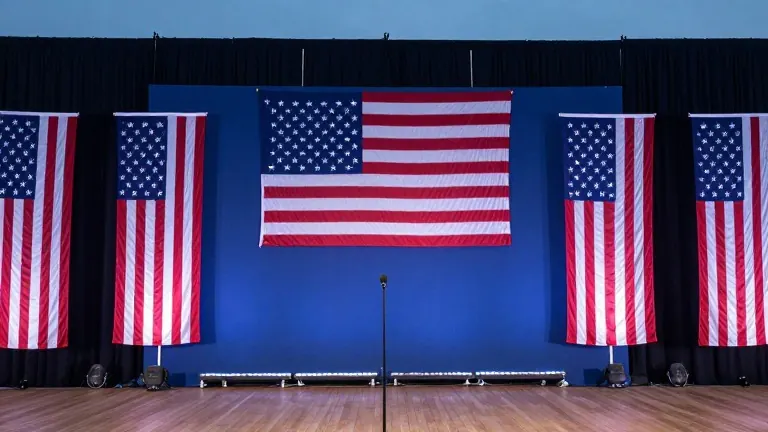
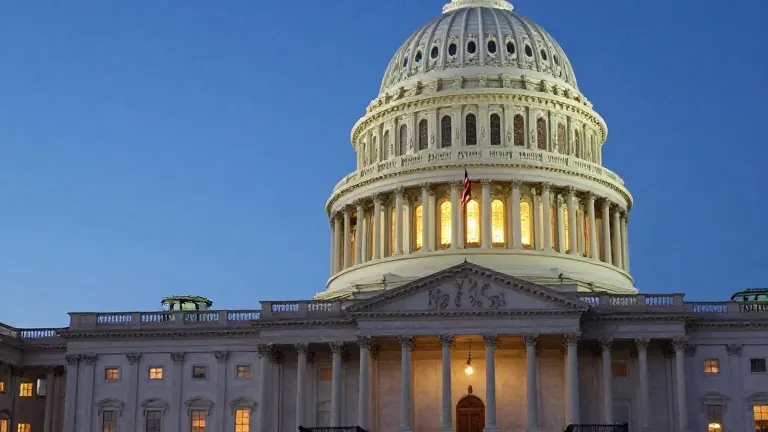
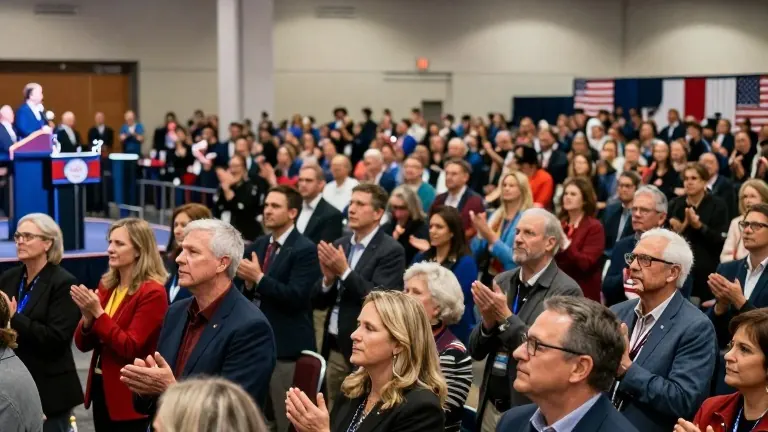
President Donald Trump and former President Bill Clinton campaigned in neighboring Southern states on Friday, each urging supporters to vote in a midterm election that will determine which party controls Congress. Trump addressed supporters in Daytona, Florida, while Clinton spoke in Tupelo, Mississippi, an hour earlier.
"These are the most important midterm elections ever," Trump told the crowd in Daytona. Clinton, speaking to Democrats, invoked a Republican predecessor: "My friend George Bush once said, 'Democracy is self-correcting.' We are about to find out in Mississippi if it's true." He concluded by asking the audience to vote for Democratic Senate candidate Scott Colom.
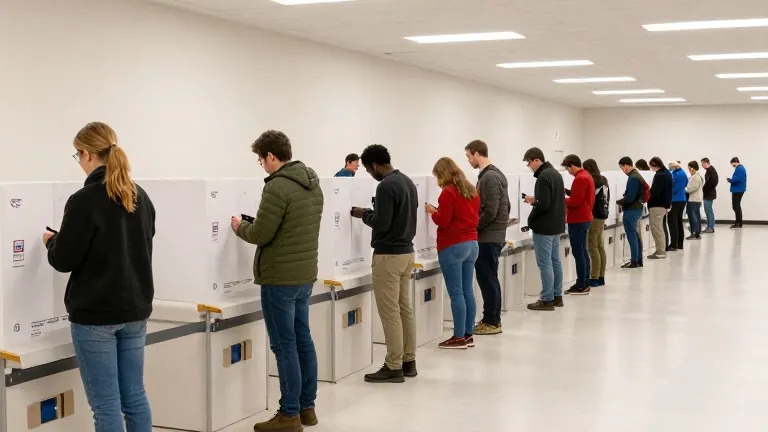
Turnout is already running high. An Associated Press analysis of voting data found that nearly 10 million more Americans had cast ballots five days before Election Day than at the same point in 2022. Early voting is up roughly 30% in Iowa and Kansas, two states with competitive Senate races where Trump plans to visit Sunday.
The early vote has also climbed in Texas, where more than 6.3 million voters had cast ballots as of Wednesday, compared with 4.2 million at the same point four years earlier, a 50% increase. Advance voting is up more than 30% from four years ago in Maine, Michigan, North Carolina and Kansas. In South Carolina, where voters are choosing a successor to the late Republican Sen. Lindsey Graham, early voting is up 83%.
In Alaska, the Justice Department is investigating an alleged scheme to place a candidate with the same name as Republican incumbent Sen. Dan Sullivan on the ballot. U.S. Attorney Michael Heyman confirmed Friday that the probe has been underway for months. Heyman said law enforcement resources were sent to the state this week after The New York Times reported that Democratic Senate candidate Mary Peltola's campaign appeared to be involved in recruiting Dan J. Sullivan to run alongside her Republican opponent.
Peltola denied Thursday that she knew about efforts to add another candidate with her opponent's name to the ballot. The Justice Department said it wants to isolate ballots ranking Dan J. Sullivan to test the level of "confusion" among voters.
Trump briefly changed his campaign schedule on Friday, canceling planned visits to Iowa and Kansas to focus on telerallies, then abruptly rescheduling back-to-back rallies in those states for Sunday. "I thought this was going to be my last one, Byron," Trump told Republican gubernatorial candidate Byron Donalds at the Daytona rally. "I thought I could relax. Twenty-eight days in a row of this crap is a lot."
In Michigan, Democrats are dealing with lingering divisions after progressive Abdul El-Sayed narrowly defeated Rep. Haley Stevens in the August primary. Stevens appeared on CNN to say she would vote for El-Sayed while calling on him to improve relations with Jewish and Black voters. Her appearance came hours after her fiance said he would vote for El-Sayed's Republican opponent, Mike Rogers.
On Friday, Stevens released a statement on social media criticizing El-Sayed and asking him to condemn an advertisement linking U.S. support for Israel to rising grocery prices. "Abdul promises to get money out of politics," Stevens wrote. "He can begin by getting Israel out of his explanation for everything Michigan cannot afford."
El-Sayed, who has apologized for some past comments while seeking to unify Democrats, responded in a statement Friday that noted his primary victory over Stevens. "Let's all focus on the task at hand: beating Mike Rogers," he said. Rogers later praised Stevens as "a courageous leader who deserves the respect of every Michigan voter" and said she was right to call on El-Sayed to denounce the ad.
Source: Pasadena Star-News