Breaking: Election Day is here! Make your selections: The South Central and national stakes
Voters across the nation decide the balance of power in Congress and statehouses, with key races in Texas and the South Central region shaping the final two years of President Trump's term.
By Sakura McCarthy ·
Election Day has arrived, and the nation is casting its vote to determine who controls the House of Representatives and the Senate for the final two years of President Donald Trump's second term. This midterm election serves as a direct referendum on the current administration, with voters weighing high prices and the ongoing war with Iran according to the Associated Press. The outcome will define the legislative landscape for the remainder of the term, as all 435 House seats and 35 Senate seats are up for grabs. Republicans currently hold a majority in both chambers, but Democrats need specific gains to shift control, making every district and state a critical battleground for the next two years.
In the House, the math is precise and unforgiving for both parties. Democrats need a net gain of three districts to secure a majority, while Republicans can afford to lose no more than two seats to keep their current advantage. Ballotpedia identifies 46 battleground districts, highlighting the tightness of the race in areas that voted for President Trump in 2024 and others that supported former Vice President Kamala Harris. With 60 incumbents not seeking reelection, the field is open in many places, and the new congressional maps in states like Texas and Florida will play a significant role in how these seats are counted.
The Senate race is equally pivotal, with 33 regular elections and two special elections determining the balance of power. Democrats need a net gain of four seats to take control, a hurdle that requires winning several competitive states. Republicans, holding 53 seats, can lose only two to maintain their majority. The stakes are high in states such as Georgia, Michigan, and New Hampshire, where the margins from the 2024 presidential election were narrow. These races will decide whether the administration faces a unified Congress or a divided government for the rest of its term.
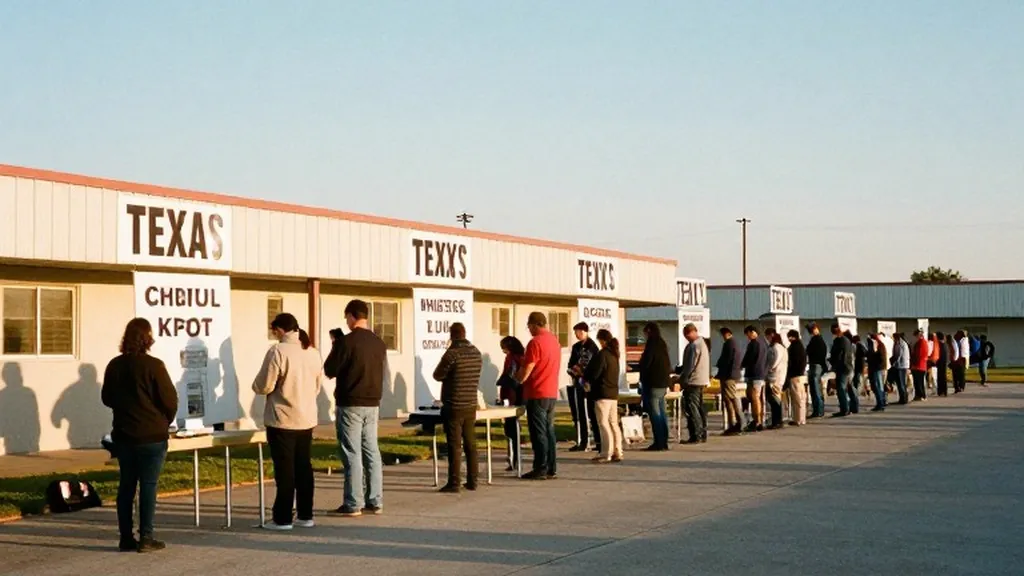
Texas and the South Central region are in the spotlight this morning, with polls opening early to accommodate the large voter base. In Texas, polls are open from 7 a.m. to 7 p.m. local time, and voters are deciding the open Senate seat and the governor's race where incumbent Greg Abbott seeks re-election. The AP notes that the Texas Senate race is a key matchup, featuring Republican Attorney General Ken Paxton, who was backed by President Trump in the primary, against Democrat James Talarico. This race is crucial as it could shift the state's influence in the national Senate.
Across the region, Oklahoma polls are also open from 7 a.m. to 7 p.m., with voters choosing between candidates for an open Senate seat and an open governor's race. The lack of an incumbent governor in Oklahoma adds a layer of uncertainty to the state's political future. In Louisiana, polls open at 6 a.m. and close at 8 p.m. for Tuesday elections, allowing voters to select a candidate for the open Senate seat. There is no governor's race in Louisiana this cycle, but the Senate contest remains a focal point for regional control.
Arkansas joins the regional mix with polls open from 7:30 a.m. to 7:30 p.m. Voters in the state are deciding the fate of the Senate seat held by incumbent Tom Cotton and the governor's race where incumbent Sarah Huckabee Sanders is running for re-election. These races are part of a broader pattern in the South Central states where incumbents face challengers in a year defined by economic concerns and national policy disputes. The outcome in these states will help determine the regional balance of power in both chambers of Congress.
Nationwide, the mood is charged with anticipation and anxiety. According to AP-NORC polling, 35% of U.S. adults approve of President Trump's job performance, while about 7 in 10 say the country is heading in the wrong direction. More than 57 million people had already voted as of Monday, surpassing early vote totals from four years ago in many closely watched states. This high level of participation underscores the importance voters place on the upcoming decisions, as they look to signal their approval or disapproval of the current direction of the country.
The economic issues are at the forefront of the campaign, with voters expressing frustration over high prices. James Moore, a 57-year-old librarian in Raleigh, North Carolina, told the AP that he is paying more taxes, more for healthcare, and more for everything. In contrast, Mark Barker of Palm Beach Gardens, Florida, expressed support for President Trump, saying he has been following the president and believes he is doing an awesome job. These diverse perspectives reflect the deep divisions in the country as voters head to the polls to make their choices on a day that could reshape the government.
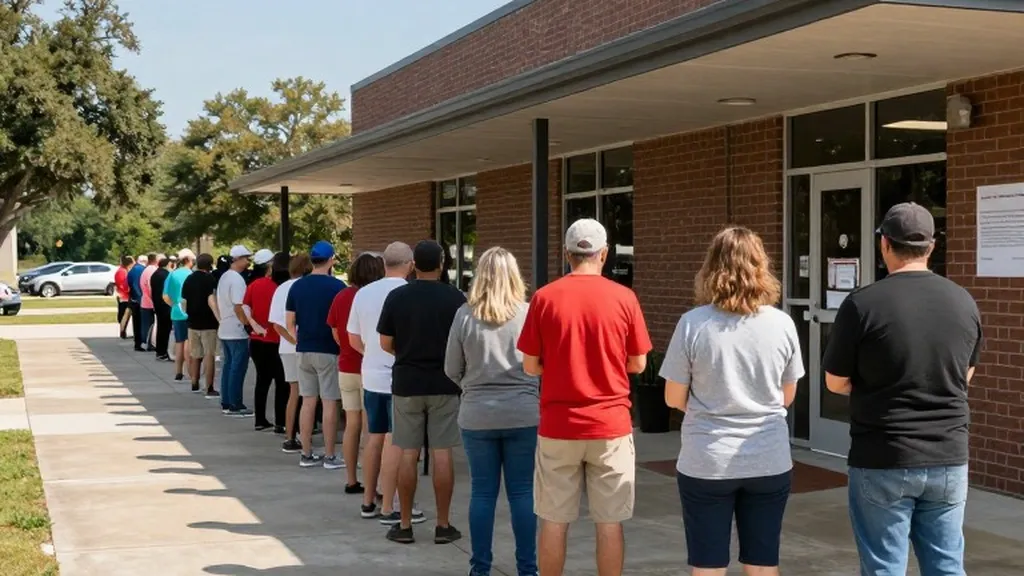
For those voting today, it is essential to know the logistics of the process. You can find your polling place at vote.gov or by contacting your state election office. Poll hours vary by state, so it is important to check the specific times for your area. For example, in states like New York, polls are open from 6 a.m. to 9 p.m., while in others like Indiana, they close at 6 p.m. Anyone in line when polls close is entitled to vote, so arriving early is a smart strategy. ID rules vary by state, so checking your local requirements before heading out can save time and ensure a smooth voting experience.
The financial side of the election has been a record-breaking affair, with the 2026 elections likely to be the most expensive in history. Republican committees have outraised and outspent their Democratic counterparts, aided by groups affiliated with President Trump and Elon Musk. However, at the candidate level, Democrats have outraised their opponents. This spending has been heavily targeted, with 88.1% of Republican general election TV ad spending going to states and districts that President Trump won in 2024. This strategic allocation of funds highlights the focus on holding onto key areas and expanding the Republican footprint.
As the day progresses, the eyes of the nation will be on the battleground states where the outcome is still undecided. In Maine, the race between Senator Susan Collins and Democrat Troy Jackson is considered a toss-up by multiple rating agencies, with economic strain and tariffs making the state competitive. In Iowa, the open Senate seat is seen as a toss-up or a lean toward Republicans, while in Kansas, a traditionally Republican state, the race has become central to the fight for Senate control. These states, along with others like Georgia and Michigan, will determine the final balance of power in the upper chamber.
The implications of today's results extend beyond the immediate control of Congress. If Democrats win even one chamber, investigations and possible impeachment proceedings become likely, with House Democratic Leader Hakeem Jeffries outlining a 100-day agenda focused on the cost of living and oversight. A strong Democratic performance could also boost potential 2028 candidates, while a Republican hold would solidify the party's position for the next presidential cycle. The results will also have an impact on Wall Street, with investors watching for signals on AI spending and debt ceiling negotiations, according to Reuters.