Netanyahu Leads But Lacks Majority
Israeli media projects 53 seats for the prime minister's bloc, falling short of the 61 needed to control the Knesset.
By Eric Coleman ·
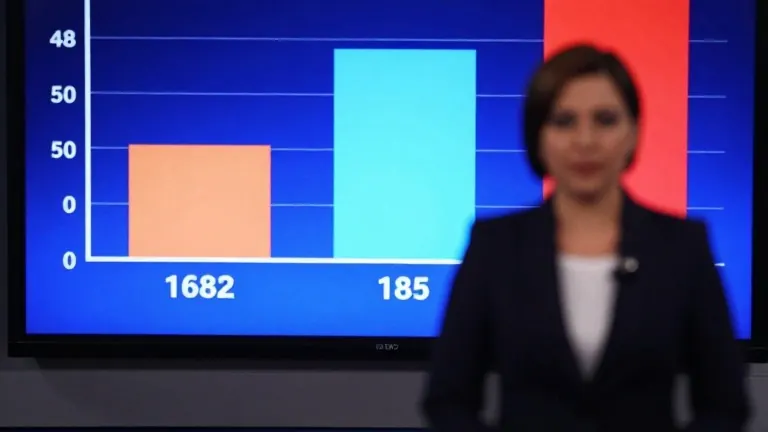
Israeli media projected on Thursday that Prime Minister Benjamin Netanyahu and his allies would secure 53 seats in the 120-seat parliament, leaving him without the majority needed to govern. The opposition bloc is projected to hold 48 seats, while parties led by Arab citizens are projected to take 19 seats. No side has the 61 seats required to form a government.
Final results are expected late Thursday night after counting approximately 500,000 absentee ballots from military personnel, diplomats, and patients in hospitals. Officials do not expect these votes to drastically change the current projections. President Isaac Herzog will task a leader with forming a new government next week, a process that traditionally goes to the candidate with the most votes but is not mandatory.
Gadi Eisenkot, the former military chief and Netanyahu's main rival, announced on Wednesday that he is open to working with Arab-led parties to reach the necessary majority. Although he has not explicitly called for a coalition with them, Eisenkot stated his government would serve all citizens. The Joint List, an Arab-led party, responded by declaring it was open to political cooperation, citing a historic turnout among Arab voters.
Netanyahu's Likud party, which received the highest number of votes, has accused Arab-led parties of stealing the election and asked the electoral committee to investigate. The committee reported that the number of irregularities in the relatively quiet election was low, but Likud has not provided specific evidence to support its claims.
Small demonstrations took place in Tel Aviv and Jerusalem on Wednesday night in support of a coalition that includes Arab parties. Until 2021, no Arab party had joined a government coalition. Brosli Elias, a resident of Nazaret, expressed cautious hope that a new government might address the rights of the 20 percent of the population who are Arab citizens.
If no government is formed after multiple attempts, Israel will face new elections early next year. Both Herzog and Eisenkot have said they want to avoid that outcome. The political uncertainty overlaps with the threat of renewed attacks on Iran, which the Trump administration has discussed for the period after the U.S. midterm elections on November 3.
Source: La Voz de Houston