NHTSA Proposes Cyan Lights as the Standard Signal for Driverless Cars
Federal regulators are seeking to standardize how autonomous vehicles communicate their operational status by mandating a specific blue-green light system to replace inconsistent industry practices.
By Eric Coleman ·
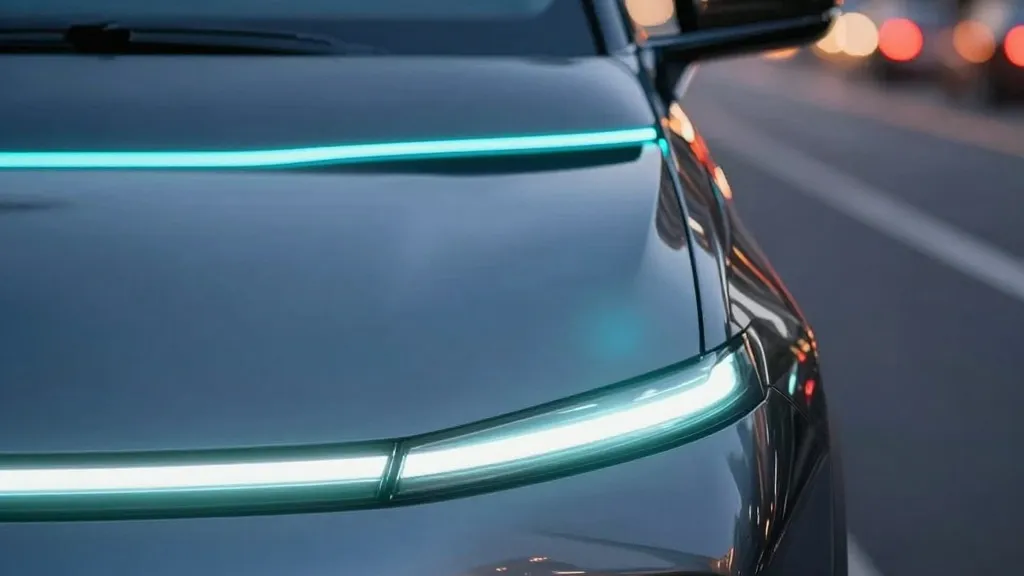
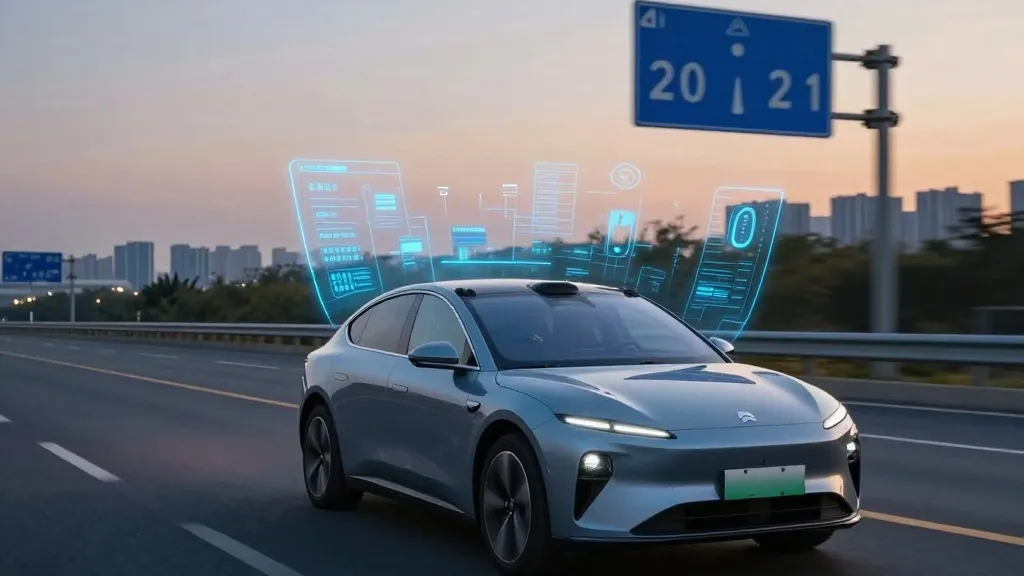
The National Highway Traffic Safety Administration (NHTSA) has formally proposed a new federal standard requiring driverless vehicles to use cyan-colored marker lights to indicate that no human is at the wheel. This regulatory move aims to resolve a long-standing debate in the automotive industry regarding how autonomous vehicles should visually distinguish themselves from traditional cars. By selecting a specific blue-green hue, the agency hopes to create a uniform signal that is easily recognizable to law enforcement and other road users.
The proposal involves rewriting Federal Motor Vehicle Safety Standard (FMVSS) No. 108 to better accommodate the unique design needs of autonomous vehicles. The agency argues that the current lighting palette is already crowded with red, amber, and white lights for brakes, turn signals, and headlights, as well as flashing blue and red lights for emergency vehicles. Cyan was chosen because it fills a visual gap in the spectrum, theoretically allowing drivers to identify a robotaxi without confusion or misinterpretation.
While the cyan lights would be optional for manufacturers, the rule establishes strict federal standards for their color, brightness, and placement. This consistency is designed to prevent a fragmented market where different companies use varying colors or signals. The standard would apply to major robotaxi operators such as Waymo, Nuro, and Zoox, as well as traditional automakers like General Motors and Mercedes-Benz that are developing driverless technology.
There is some precedent for this approach. Mercedes-Benz previously received state-level approval for turquoise lights on its Level 3 Drive Pilot vehicles, although the company later shifted its strategy toward a Level 2++ system. Despite this corporate pivot, NHTSA is pushing for a nationwide standard to ensure that all autonomous vehicles communicate their status in a uniform manner once they hit the roads.
The proposed rule also includes significant changes to existing lighting requirements that do not apply to vehicles without human drivers. NHTSA intends to remove mandates for physical hazard switches, manual beam shifters, and interior turn levers. These controls are unnecessary for autonomous systems but are currently required under federal law for all vehicles.
Additionally, the agency is updating the 12.8-volt testing standard to allow automakers to design around modern LED architectures without facing excessive administrative hurdles. The proposal also considers eliminating rules that dictate the physical positioning of high-beam and low-beam lights relative to one another. These changes are part of a broader effort by the Department of Transportation to streamline the deployment of autonomous vehicles.
The goal of these administrative updates is to make it easier for manufacturers to build cars that lack traditional human-oriented controls, such as steering wheels and pedals. By simplifying the regulatory landscape, the government hopes to accelerate the transition to driverless transportation. However, the agency is also maintaining a firm stance on existing rules for vehicles that do not meet the new autonomous standards.
Last month, NHTSA opened an audit query into the Tesla Cybercab to examine the technical data and certification processes used by the company. The audit focuses on the absence of specific design features, including sideview mirrors, pedals, and a steering wheel, which are currently required under FMVSS. This enforcement action underscores the regulatory tension between accommodating new autonomous designs and adhering to established safety standards for human-driven vehicles.
Source: The Verge · original report published