Caribbean Leaders Demand Formal Apology and Debt Cancellation
As King Charles III prepares to speak in Antigua, the CARICOM Reparations Commission rejects improved repayment terms in favor of full compensation for historical enslavement.
By Eric Coleman ·
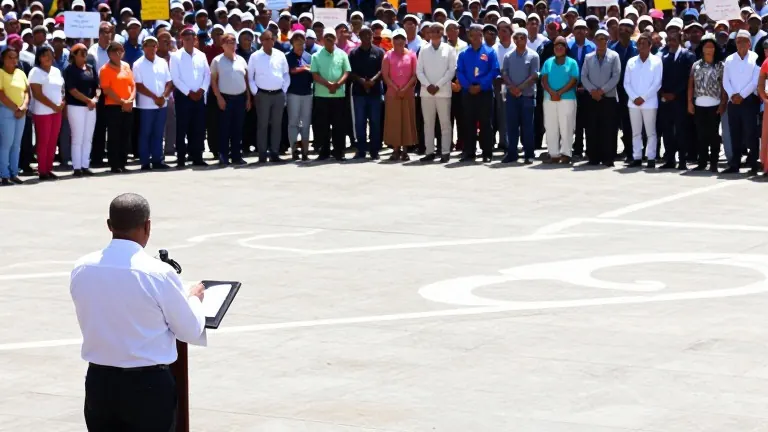
Caribbean leaders are demanding a formal apology and concrete financial reparations from Britain to address the legacy of transatlantic enslavement. The demand coincides with King Charles III’s scheduled address to the Commonwealth Heads of Government Meeting in Antigua on Tuesday. Civil society groups have organized protests at the event, pressing the British crown to move beyond expressions of regret toward a legal acknowledgment of responsibility.
The pressure on the UK government intensified after Prime Minister Andy Burnham indicated openness to calls for a formal apology. The Reparations Commission of the Caribbean Community has long sought this dialogue, noting that previous British leaders have only expressed deep sorrow. In 2015, Prime Minister David Cameron rejected reparations and instead proposed a 25 million pound project to build a prison in Jamaica for the deportation of long-sentence Jamaican nationals.
The Commission argues that an apology is a necessary first step for accountability and healing. Under the Ten Point Plan for Reparatory Justice, an apology serves as a formal gesture of goodwill that acknowledges the shared history between European and Caribbean states. It accepts responsibility for crimes such as complicity in native genocide and the introduction of chattel slavery. This acknowledgment is meant to commit nations to non-repetition and to repair harms inflicted on victims and their descendants.
However, the Commission insists that an apology must be followed by meaningful action, not just improved debt repayment conditions. Sir Arthur Lewis, a key figure in the modern reparations movement, framed the issue in economic terms in his 1939 book Labour in the West Indies. Lewis described the unpaid labor extracted from millions of enslaved people over 200 years as a debt that Britain has yet to repay. He argued that economic transformation in the colonies could not occur until the colonizer honored this black debt.
Current international frameworks support the view that enslavement fundamentally altered global power structures. The Ten Point Plan, a March 2026 United Nations resolution from Ghana, and General Recommendation No 40 from the UN Committee on the Elimination of All Forms of Racial Discrimination all describe the transatlantic trade as a system that reduced Africans to permanent, nonhuman property. This system created enduring hierarchies of race and gender that still shape modern economics and governance.
Descendants of enslaved people want a conversation focused on debt cancellation rooted in these lingering legacies. They reject the idea that a nation which profited from chattel slavery should only offer better terms for paying back loans. Instead, they demand monetary compensation and the removal of debt burdens. The Commission also seeks to correct the historical record, noting that enslaved people in Jamaica, Haiti, and elsewhere led the fight for abolition, not the British state.
While Burnham may launch a new drive on debt to help poor countries pay back loans under better conditions, the Commission rejects this approach. They argue that a nation responsible for historical crimes must be held accountable for its actions. The group states that a crime does not rot but is carried forward until justice is achieved. They are calling for Britain to apologize and pay its debt.
The upcoming meeting in Antigua will test whether the British prime minister can secure a formal commitment before the royal address. The Commission views the event as a critical moment to squeeze a promise out of the government. They believe the current political climate, marked by protests and renewed calls for justice, has created the necessary pressure for a shift in British policy.
Source: Al Jazeera