Texas voters face long wait for official 2026 midterm certification
Preliminary results will appear quickly, but state law requires a multi-step verification process before winners are legally confirmed.
By Robert Herrera ·
Preliminary election results will begin appearing shortly after 7 p.m. tonight, but the official certification of these votes will not happen until weeks later. This delay is standard procedure in Texas, where state law mandates a rigorous review process to ensure accuracy before winners are legally declared.
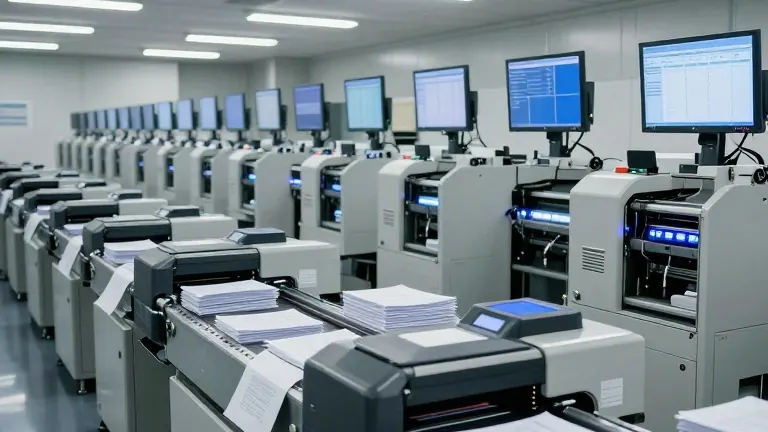
The first wave of data will rely heavily on ballots cast during the early voting period. Election officials in counties with populations exceeding 100,000 are permitted to count mail-in ballots after early voting concludes. Smaller counties must wait until the morning of Election Day to begin counting. Once the counting process starts in any jurisdiction, state law prohibits officials from stopping until it is complete.
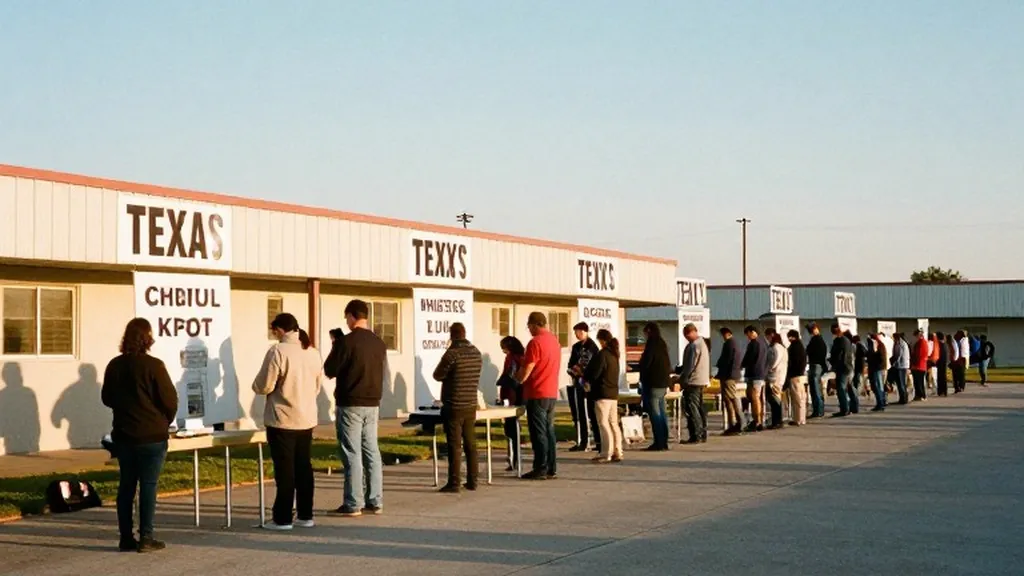
After polls close, election workers must transport ballots and equipment from voting locations to central counting stations. In large counties like Harris, this logistics challenge can delay results. Some polling sites in Harris County are more than 45 minutes from the county headquarters. To mitigate this, large counties operate multiple substations where workers can drop off materials to begin the tallying process sooner. Workers must manually enter totals for every race into the statewide election management system.
Several deadlines govern the finalization of the count. Mail-in ballots sent from within the United States must arrive by Nov. 4, while those sent from overseas are due by Nov. 9. All mail-in ballots must have been postmarked before 7 p.m. on Nov. 3. Provisional ballots, which are used when voter eligibility is uncertain, must be reviewed by Nov. 13.
Recount rules in Texas are stricter than in most other states. An automatic recount is triggered only by an exact tie. A losing candidate can request a recount if they lost by 10% or less of the total votes. The cost falls on the requesting candidate, set at $100 per precinct for electronic systems or $60 per precinct for paper ballots. If the recount changes the outcome, the deposit is refunded.
Kevin Johnson, executive director of Election Reformers Network, noted that it is very rare for recounts to alter the final outcome. Jonathan Diaz, director of voting advocacy at the Campaign Legal Center, added that only five other states limit automatic recounts to exact ties: Alaska, Maine, Montana, South Dakota, and Utah. Most states trigger automatic recounts for margins as small as 0.5%.
Local canvassing authorities certify local elections, such as city council races. For state and congressional races, Secretary of State Robert Howden will verify the results. Governor Greg Abbott will then issue certificates of election to the winners. The races for governor and lieutenant governor will be certified by House Speaker Dustin Burrows on Jan. 12, the first day of the 2027 legislative session. Joshua Blank, research director of the Texas Politics Project at the University of Texas at Austin, emphasized that this certification is a legal obligation, stating, "It is not a 'may,' it is a 'shall.'"
Source: KSAT-TV